BUILDING TRUST IN AI MEDICINE
From an unusable prototype to an acquisition, built on trust earned in person.
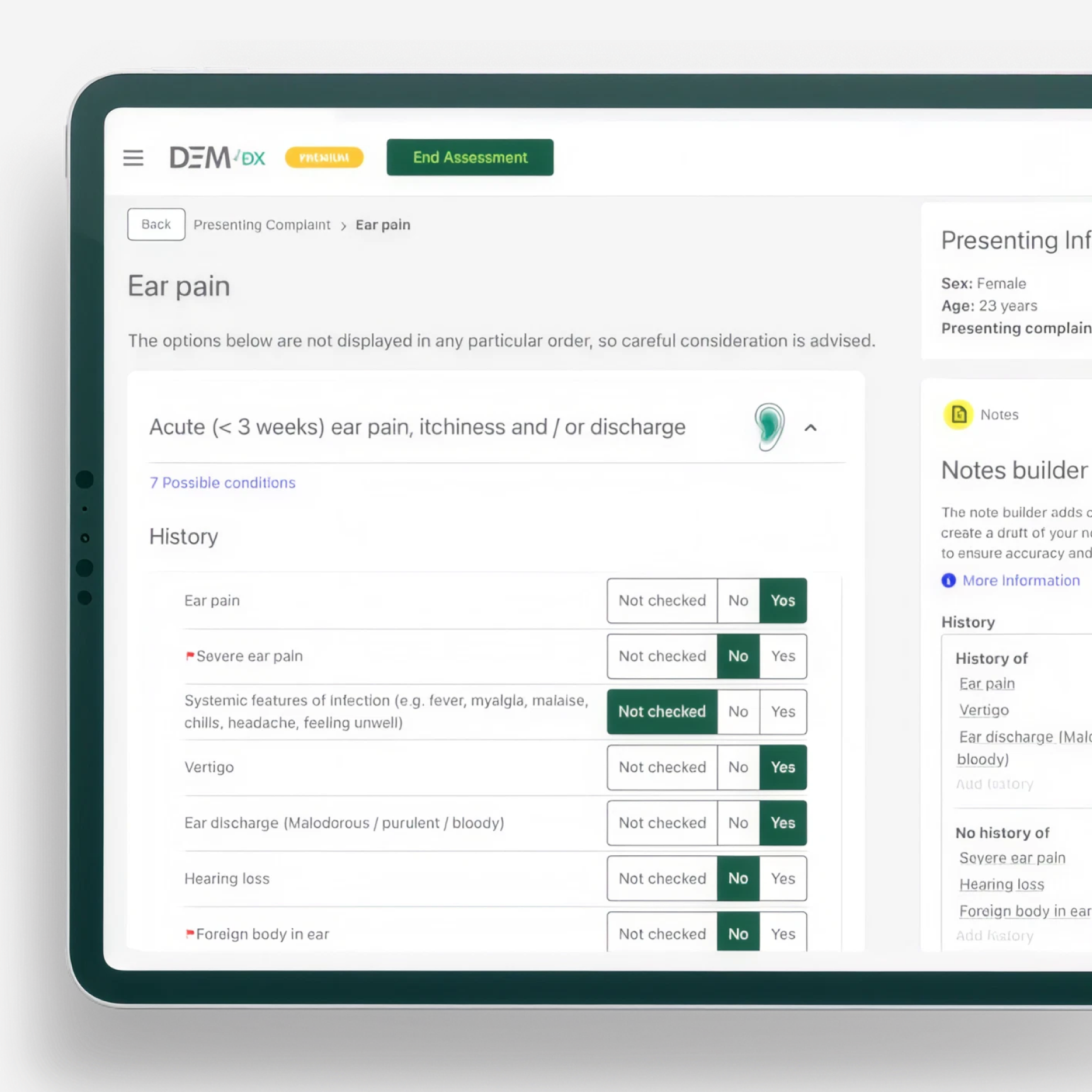
I joined Dem DX as lead designer, brought in by the two co-founders, a doctor by training and a CTO whose first version of the diagnostic app was functional but unusable, built the way engineers build things when nobody's thought about the person using them. My job was to take it from a live iPad prototype to something that worked properly on web and iPhone.
Growing the network
The core team grew slowly, three to around seven, but the real scale was in who we brought in around it: doctors and medical students drawn to early AI adoption in medicine, helping us write and validate the diagnostic pathways themselves. I stayed in design and product throughout, but a large part of the job was outside the studio: sitting with doctors and institutions, showing them the product, and earning their trust in person.
Trust in practice
That trust is what won Moorfields Eye Hospital. I built a live prototype for triaging ophthalmology cases faster, and the contract came down to relationships as much as the product, repeated in-person meetings, and a genuine one with one of the hospital's senior eye doctors. The same prototypes got the product into the curriculum at UCL and several other UK universities, used in live lectures, with our CEO invited as a guest lecturer. It was built to help doctors get from A to Z faster, never to replace them.
Reach and exit
The product also found its way into hospitals in Africa, trialled and then adopted for triaging. It's still in use there today.
I left in 2018 with the design team established and the product proven across NHS, university and international settings. The business was acquired this year by a private US healthcare company at three times its valuation.